
Introduction
Over the past two decades, the field of terminology has undergone significant transformations, not only of the tools employed but also of methodological approaches. In an era marked by rapid and often disruptive technological change – frequently intertwined with economic and social instability – the role of collaborative work, as opposed to individual effort, has gained renewed importance. Collaboration has even become central to various professional activities, including translation and terminology management.
This paper aims to explore the implementation of collaborative terminology management practices in professional settings and their pedagogical integration within academic curricula. To this end, we are going to highlight first the theoretical foundations of collaborative terminology and then present some notable implementations of collaborative terminology management at the European level. In the following section, the role of collaboration in terminology management within the Directorate-General for Translation (DGT) of the European Commission will be explored, with special focus on the workflow and the use of a new collaborative environment, Terminology Projects Module (hereinafter TPM). In addition, we intend to examine the pedagogical aspects of a collaborative terminology project developed between our Master's program in Professional Translation and the DGT. The objective of the terminology project was to clean and update terminological data in Greek language in the IATE terminology database and for this reason the TPM was tested by our students.1 Furthermore, the paper presents some qualitative research findings of a small-scale survey regarding users’ satisfaction with TPM and concludes with a comparative evaluation of various methodologies and tools employed in pedagogical settings for collaborative terminology work.
Collaborative terminology: some theoretical considerations
A definition that is often used to describe collaborative resources in terminology management is the one proposed by Alain Désilets, in 2010, as “Wikipedia-like platforms for the creation and maintenance of large terminology resources by a crowd of translators, terminologists, domain experts, and even general members of the public”.
Julie Gariépy, in her Master’s thesis entitled La collaboration en terminographie. Étude de cas comparée de la terminographie collaborative et de la terminographie classique, defended in 2013, at the University of Ottawa, puts more emphasis on the activities included and proposes the following definition: “Collaborative terminography involves a variety of activities such as the identification, collection, and management of terms, terminological entries, and terminology resources, carried out by a group of individuals (either professional or non-professional).2 This collaboration is usually facilitated by IT tools” (Gariépy, 2013: 20). Collaboration in terminology may involve various partners, such as terminologists and translators, or terminologists working with a broader community—including subject-matter experts, special interest groups, or even the general public.
Moreover, Gariépy introduces the concept of “degree of openness” (degré d’ouverture) as a critical parameter in evaluating collaborative terminology frameworks, encompassing both the special platforms and the organisational structures of terminology groups. This notion relates to the extent to which participation and access are permitted within a given system. In highly open environments—whether software-based or community-driven—access is open, and all participants possess equal rights, contributing collectively toward shared objectives without hierarchical constraints (Désilets et al., 2009). In contrast, systems characterised by a lower degree of openness require individuals to seek authorisation from administrators prior to engaging. Participation in such contexts is governed by predefined rules, and users’ rights do not necessarily cover all the functionalities of the tool or platform. A characteristic example of a highly open environment is the platform TermWiki,3 advertised as a Global Social Knowledge Network, where users share term collections across various domains without any established quality control. The platform offers a user‑friendly interface, which contributes to its popularity among undergraduate students. Nevertheless, as Ar Rouz et al. (2021: 150) observe, its content is predominantly encyclopedic rather than terminological and frequently lacks a rigorous scientific methodology. In our study, we aim to focus on projects and solutions that exhibit a lower degree of openness, as our point of departure is professional environments.
Collaborative terminology management in practice
Collaborative terminology management is shaped by a range of parameters. Some are situational, including the temporal organisation of the work (synchronous or asynchronous), the spatial configuration (co‑located or remote), or the size of the working group. Others are methodological and relate directly to the core processes of terminology work, such as the agreed workflow, the selection of documentary sources, the conceptual fields adopted, and the overall quality standards applied to the resource. The purpose of the collaboration is likewise a determining factor, as is the degree of engagement demonstrated by the participants. Furthermore, generative AI has introduced significant changes to terminology work, particularly in relation to definition production and the identification of equivalences. Although these recent developments are highly relevant, they fall outside the scope of the present article. In our study we will concentrate on the methodology and the tools used in different notable examples of collaborative terminology management.
Examples of collaborative terminology projects in the European context
In the following sections, we intend to present some implementation cases. In particular, we will start by presenting some European collaborative terminology management projects, which reflect cooperation either between different countries (and languages), or between different actors in the same language, in a more structured and controlled way.
Legal Language Interoperability Services (LISE)
Although now completed, the European project merits mention for its significant contribution to the promotion of collaborative terminology practices. Initiated in 2011, the project aimed to support public and private institutions in the exchange of terminological resources, as well as in the cleaning and enrichment of terminological data within the legal and administrative domains. By implementing a structured workflow, LISE primarily sought to facilitate collaborative processes among users for the review and quality assurance of multilingual terminological databases. Concluded in 2013, one of its enduring outputs is a set of guidelines for collaborative terminological work in the legal domain (Chiocchetti & Ralli, 2013; Chiocchetti et al., 2017). The guidelines are mainly addressed to civil servants who will be called upon to engage in collaborative terminology management without necessarily having specific knowledge in the field, and for this reason some key theoretical and practical issues are presented in detail.4
Helsinki Term Bank for the Arts and Sciences
The Helsinki Term Bank for the Arts and Sciences project aims to create an open, interdisciplinary, multilingual and continuously updated terminological database for all fields of scientific research in Finland (Enqvist et al., 2021).5 Using the open source Semantic MediaWiki application, the project offers a collaborative platform for terminological work and conceptual analysis and is primarily aimed at field experts. It is a working method that the initiators of the platform call “limited crowdsourcing” or “niche sourcing”. In other words, the core of the terminological work is carried out by teams of experts, from a variety of fields of art and science, who have access to a wide range of wiki editing resources and can add information to each data category in the database in their area of expertise. At the same time, the project enables public participation through the discussion forum and through access to the terminological material in the database.
In particular, the terminological data available to all users includes the following data categories:
- Term and its synonyms in Finnish,
- Definition,
- Conceptual relationships and concept diagrams,
- Morphological information,
- Graphical illustrations, diagrams or pictures,
- Context of use,
- Equivalents in other languages.
Examples of collaborative management tools in the academic context
Collaboration in terminology has gained increasing prominence within academic contexts over the past decade. As emphasised by Łucja Biel and Rosario Martín Ruano, partnerships between universities and international organisations represent “an opportunity to ensure the professional realism of training and to incorporate project-based learning into the classroom” (2022: 159). This pedagogical choice is consistent with the theoretical framework of Project‑Based Learning (PBL), which emphasises the active role students assume in projects developed in collaboration with real‑world clients (Kiraly, 2005).
European and international institutions – such as the Terminology Coordination Unit (TermCoord) of the European Parliament, the Directorate-General for Translation (DGT) of the European Commission, and the World Intellectual Property Organization (WIPO) – have formalised collaborative frameworks for terminology management with various universities belonging to the European Masters in Translation Network (EMTnet).6 These partnerships have been further strengthened through the implementation of specialised collaborative tools, which are described in the following sections.
TermiCo
An important endeavour of collaborative terminology tool is the TermiCo terminology database, designed within the framework of the Erasmus + OTCT (“Optimising Translator Training through Collaborative Translation”) project that took place in 2014-2016. Although the database7 is not fully operative, it is interesting to mention some technical features and methodological choices of its initiators, in the light of collaborative terminology management in academic environments. These are as follows (Ar Rouz et al., 2021: 150-152; Ar Rouz, 2025):
- The database is designed to be available in cloud computing.
- The database will provide the possibility for the user to submit comments and suggestions to existing terminology records.
- A voting system is foreseen for the approval or rejection of the proposed terms.
- A network of administrators who would be responsible for the final judgement of the terms in the language concerned is desirable for some languages.
Each of the choices outlined above plays a crucial role in shaping a productive collaborative environment, in accordance with the rules of terminology work. They contribute not only to the effective training of students and future translators – by fostering critical thinking and methodological rigor –, but also to maintaining high standards of quality for the terminological resources developed.
FAIRterm
Another collaborative, open access tool developed in the academic context is FAIRterm. It is a compilation tool, designed by the University of Padua (Vezzani, 2021), offering a web interface that allows the collaborative development of multilingual terminological entries. The tool is designed in accordance with the ISO/TC 37 standards for terminological resource management and the FAIR principles. These principles, which were formulated in 2016, define the technical parameters that must be taken into account in order to enable the reuse of digital data and their uniform indexing. The acronym FAIR is derived from the English terms findable, accessible, interoperable and reusable (Wilkinson et al., 2016). In French the terms are rendered as trouvable, accessible, interopérable and réutilisable.
The FAIRterm tool requires registration and can be used for the 24 official EU languages, as well as Turkish, Russian, Georgian, Japanese, Korean, and Chinese.8 Until 2022, in the framework of the Terminology Without Borders (YourTerm) project, the Terminology Coordination Unit of the European Parliament (TermCoord) encouraged universities to use the FAIRterm tool.
During the academic year 2021-2022, within the framework of the YourTerm project, Master’s students from our programme participated in a pilot implementation of the collaborative version of FAIRterm, in conjunction with a cohort of Master’s students from ISIT-Paris. This initiative took the form of an online collaborative terminology project in the domain of Natural Language processing (NLP), the outcomes of which are documented in Elbaz & Loupaki (2023). Throughout this period, the beta version of the software was tested by our students, providing valuable feedback for evaluation. Notably, several recommendations from our participants regarding the data categories and specific functionalities were incorporated by the tool’s developers in the new version of the tool (for a comprehensive inventory of all proposed enhancements, see Loupaki, 2024: 187-189).
Building upon our prior academic experience with terminology projects, the aim of this paper is to describe advances by testing a novel methodology and implementing a new tool by our students. More specifically, we intend to present the collaboration scheme with DGT and describe the TPM. Our final goal will be to compare this experience with previous projects, using as evaluative criteria the nature of technical challenges encountered, and the pedagogical impact observed throughout the implementation.
The case of collaborative terminology management in the DGT of the European Commission – general overview
The introduction of the TPM module in IATE in May 2022 revolutionised the way terminology projects were prepared, launched, and completed. Not only could all project phases be conducted directly in IATE, but it also allowed external partners to edit limited datasets directly in IATE thanks to special access rights, .
In DGT, there are two types of external cooperation in terminology: firstly, acquisition of terminology expertise by outsourcing a terminology project to a highly specialised expert in the field, and secondly, cooperation with students, as governed by the DGT framework on remote cooperation with universities.9 It involves from DGT’s side a language unit terminologist and from the university side, students and their professors.
Terminology work in DGT is coordinated by a central entity composed of terminology coordinators. They are responsible for preparing, launching, and monitoring the completion of terminology projects. Given the significant time pressure on DGT to deliver translations within tight deadlines, terminology must be prepared swiftly and at the earliest stages of the translation process. Translators address problematic terms in ongoing translations either by resolving them independently or by consulting terminologists through terminology helpdesks. Alternatively, these terms may be part of centrally coordinated terminology projects. Due to the urgency and the necessity to provide timely terminology solutions to DGT translators, this type of task is not suitable for remote cooperation with external assignees.
The cooperation between DGT terminologists and universities typically begins with an initial contact with the interested student. The terminologist presents the scope of the work and outlines DGT’s expectations. They also provide an introduction to working in IATE TPM. DGT terminologists remain at hand for questions from students; however, it is the university supervisor’s responsibility to monitor both the timely completion of assignments and the quality of the terminology work conducted by the students.
As remote assignments require an extended period of time to be completed, entries that might be needed for current translation assignments cannot be included in these projects. Students should follow the guidelines and state-of-the-art terminography rules provided by DGT, and all entries must be approved by their university supervisor. Entries completed by external assignees have to be validated by DGT terminologists. Once validated, they become visible to the public for general consultation and re-use.
The success of a remote cooperation with universities for terminology projects depends greatly on the individual relationships between universities and terminologists. Success is measured by effective cooperation and the quality of project outcomes.
Participation in this cooperative arrangement is an additional responsibility for DGT terminologists that goes beyond their regular duties. Therefore, it is important to ensure that the cooperation is well-structured and clear. Furthermore, it is crucial that the students’ supervisors are actively involved in the completion of the projects.
While the projects are relatively small in comparison to the overall volume of data in IATE, the effort DGT invests in this cooperation holds significant value. It serves to bring the EU closer to students, offering them meaningful experience by being able to contribute to the EU’s work, and a taste of real-life work experience.
Presentation of the TPM
The Terminology Projects Module, or TPM, is used within the framework of the “Remote cooperation between DGT and universities”, an initiative launched by the European Commission in 2022. This module allows students on professional translation programs to contribute to IATE and gain hands-on experience as the terminology work is done directly in IATE.
TPM is designed for users with appropriate rights to manage terminology projects during their lifecycle in IATE, i.e. store project metadata, manage entries and candidates, assign work to internal and external users, and monitor progress and completion of related tasks. There are numerous user categories within IATE, referred to as ‘user roles’, each with different access rights to the module. In the context of terminology projects with universities via TPM, only two user roles are foreseen:
- Terminologist (the project coordinator).
- External collaborator.
The terminologist who creates the project in TPM becomes automatically the project coordinator and can add other project coordinators to the project. The project coordinator assigns a task to the external collaborator. The external collaborator has limited access to IATE, compared to internal users. The access is based on the assignment given. In this sense, the tool has a lower degree of openness, as explained in section 1.
The tool’s interface is user-friendly and shares the same layout as the public version of IATE. The terminology project is created and assigned to the students directly by the DGT terminologists. The students are provided with personal credentials to access their specific project in the TPM module, while their coordinating professor is given access to monitor all the projects in progress. After logging on to IATE, students have access to Terminology Projects Module and to Documentation. Documentation includes both the External Collaborator’s Handbook and tutorials for the use of TPM.10
In TPM, students have the External Collaborator role, and they can manage their assignments and tasks, based on the specific access rights granted for the IATE entries assigned to them as part of a project.
Clicking on the TPM icon gives students direct access to the list of terminology projects they have been assigned to. Each project will include a specific description, named “project info”, instructions, background reference material and other relevant information, as well as the list of assigned entries. Students have direct access to clickable entry IDs, which allow them to open the full entry view and update the content. Students are also provided with assignment instructions and comments about duplicates that should be cleaned.
When clicking on “My assigned entries”, students have access to a table containing all the IATE entries that have been assigned. The entries contain different data categories. Here is a selection of the data categories most relevant to students’ work:11
Entry ID and Primarity: marking an entry as “primary” is an indication of overall quality and/or preference among possible duplicates. Primary entries are marked with a blue star.
Anchor language: the anchor to which all the other languages in the entry are attached. The definitions in other official languages should be as similar as possible to the definition in the anchor language. In IATE, English is most of the times the anchor language.
Domains: the chosen domain(s) should clearly identify the special language and context to which the concept belongs. An IATE entry usually has between one and three domains, as indicated in EuroVoc (the EU’s multilingual thesaurus).
Owner: the name of the institution that has created the entry appears at the entry. In the collaborative terminology projects, students have access only to entries owned by the European Commission.
Collections: they can be used at Language Independent Level (LIL), at Language Level (LL) or at Term Level (TL) to group subsets of data in IATE pertaining to specific projects or subdomains and to simplify the management of such data.
Cross-references: list of cross-references on the entry, including the semantic relation (narrower or broader) and the link to the relating entry.
Term: term(s) present in the project source language.
Definition: definition in the project source language.
Assignment notes: (editable field) personal notes relating to the entry.
Duplicates: list of potential duplicates for the entry.
Related entries: list of related entries, i.e. entries containing first- and second-level cross-references to the current entry.
Comments: information related to the entry, provided by the project coordinators.
Feedback: information related to the entry, provided by the project coordinators.
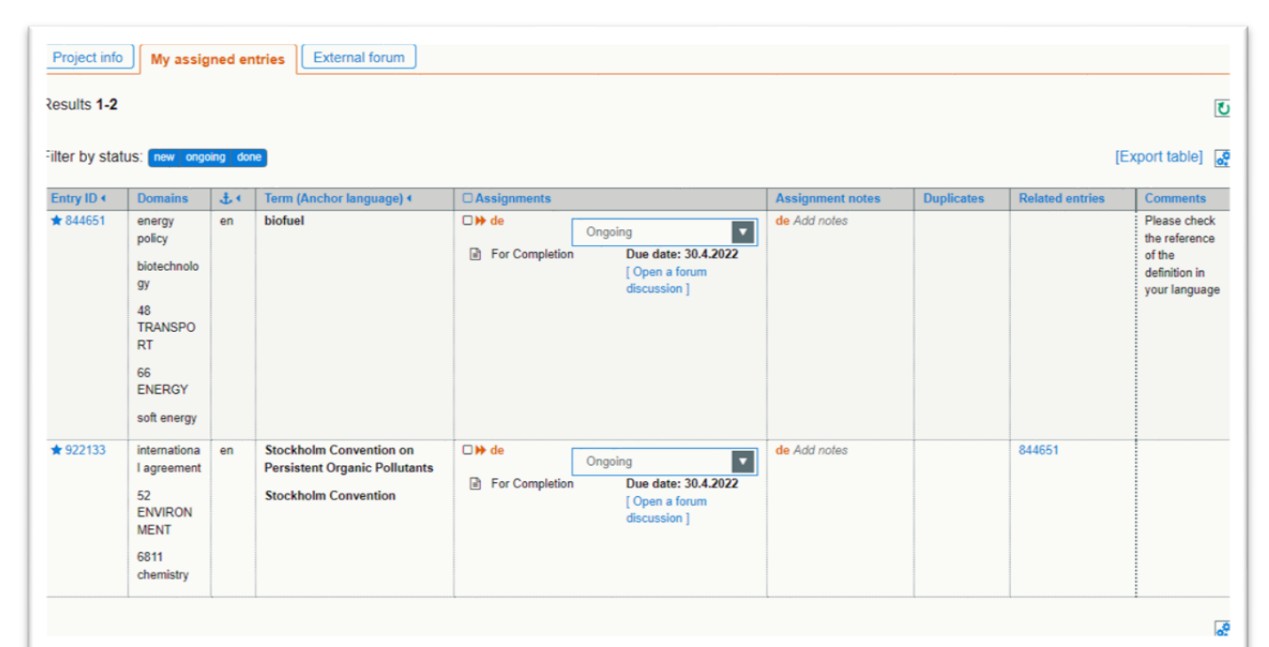
Figure 1. Screenshot of the TPM
Presentation of a collaborative terminology project with DGT in academic context
The project here described was carried out during the spring semester of the 2023-2024 academic year by three Master students, in collaboration with the Greek unit of the European Commission’s Directorate-General for Translation (DGT). Conducted within the framework of the DGT's “Remote cooperation between DGT and universities”, it formed the basis for three Master’s theses. The terminology research focused on two areas: public health, with a particular emphasis on COVID-19, and the textile industry, specifically fabrics and raw materials. In addition to the three students, the project involved two Greek terminologists from DGT and subject-matter experts.12
Aim of the project
As this was a final-year project and it formed part of their Master’s thesis, its primary aim was to consolidate the knowledge students had acquired in previous courses on terminology management and develop what is called “terminological competence”. The concept of “terminological competence” or “terminology management competence”, as an autonomous competence, was introduced by Pamela Faber in 2004 and was further explored by Silvia Montero Martínez and Pamela Faber in 2009 and by Iwona Sikora in 2013. According to Sikora (ibid.), this competence comprises two distinct components: “research and information mining competence”, which encompasses the ability to search for and document terminological information; and “technical competence”, which pertains to the effective use of technological tools for locating, storing, and managing terminological data.
In addition, due to its applied and collaborative nature, the project also aimed to:
- Provide an authentic setting reflecting the real conditions in which terminology is used.
- Propose concrete activities for managing and enriching terminological data, commissioned by professionals in the field.
- Give students access to the expertise of professionals, both in terminology and in specialised domains.
- Facilitate in-depth exploration of specific thematic areas, namely COVID-19, and the textile industry.
- Introduce students to collaborative tools dedicated to terminology management.
Workflow and methodology
The workflow and methodology of the project were structured as outlined here:
Before starting their work, the students followed a short online training by DGT terminologists, during which they were introduced to the IATE Handbook, a reference document available in English and complemented by language annexes’, with specific guidelines per language. Initially, the DGT sent to the students the files containing terminological entries for which the corresponding Greek datasets were missing (e.g. definition, context or resources). The students chose a sub-set of entries for their project, on which they carried out research and compilation work in the IATE database. At this stage, students carried out documentary research to familiarise themselves with the domains. In the next stage, the students studied the English terminology records and compared them with the Greek records to identify the nature of the missing data. Once the missing terminology data had been identified, the students searched for legislative texts on the European Union's Eur-Lex database and built up a corpus using the Sketch Engine corpus management tool. Following this stage, an initial question-and-answer session took place between the students and the DGT by e-mail and online. During these exchanges, problems concerning specific terms were raised by the students, to which our partners responded by sharing their experts’ view. At the end of this stage, a further exchange took place, this time with experts, to check the Greek equivalents of the terms. Knowing how to identify experts in a field and establish contact with them is one of the skills targeted by this type of project. Each student then provided a sample of ten completed terminology records in IATE TPM to the DGT terminologists for an initial assessment of their work. After receiving feedback, students revised everything needed and continued their work for the totality of term entries. At the end, students compiled all the records using the collaborative tool described in the next section.
Deliverables
A total of 120 terminology entries were developed in the English-Greek language pair, focusing on the domains of COVID-19 and textiles. As the project was aiming at the management and updating of terminological data in IATE, some important factors were the validity of the designations, the reliability of the sources, the date of the records, the completeness of the datasheet in terms of data categories, etc.
According to the IATE Handbook, reliability is related to the correspondence between a concept and its designation, as defined in the anchor language record, and the reliability of the sources used. Reliability assessment should satisfy at least one of the following criteria:
- The term has been obtained from a trusted source.
- The term has been agreed on by a representative body of same language terminologists.
- The term is the common designation of the concept in its field (IATE Handbook, 2024: 94).
Regarding the definitions, some were retrieved directly from Greek translations of EU texts. In other cases, the information was either partially adapted to conform to IATE’s morphological criteria, or synthesised from two distinct sources—a technique proposed by the IATE manual.
As the entries were compiled directly within the IATE database, following validation by the Greek terminologists, they were promptly made available to the public version of IATE. The rapid accessibility of the project's outcomes proved particularly beneficial for students, enhancing their engagement with up-to-date terminological resources.
Overall assessment of both the university and DGT participants
Following the completion of their Master's theses, students were invited to participate in a small-scale survey aimed at evaluating their experience. The questionnaire was concise, comprising both open-ended items that explored the perceived strengths and weaknesses of the experience, and their overall satisfaction with the TPM, as well as multiple-choice questions that assessed the clarity of instructions and the adequacy of their preparatory training.
More specifically, in the open-ended question asking whether the experience of this collaborative terminology project was beneficial for the professional development of the students, all answers were positive, underlying that “terminology issues are something I face with on a daily basis”, “the terminology sector is one of my main professional interests” and “I mostly work on medical translations that require a very thorough handling of terminology”.
Regarding the positive aspects of this collaboration, all three students replied that “the most rewarding experience was the face-to-face feedback and the advice they received from the terminologists”, “the feedback that we received from our supervisor and from DGT”, and that “working with professionals in the field of terminology was a fascinating experience”.
With respect to the instructions they received when starting the project, all students declared they were very clear (100%).
In the question measuring students' satisfaction, in relation to their former preparation, they all replied positively as illustrated in the figure below:
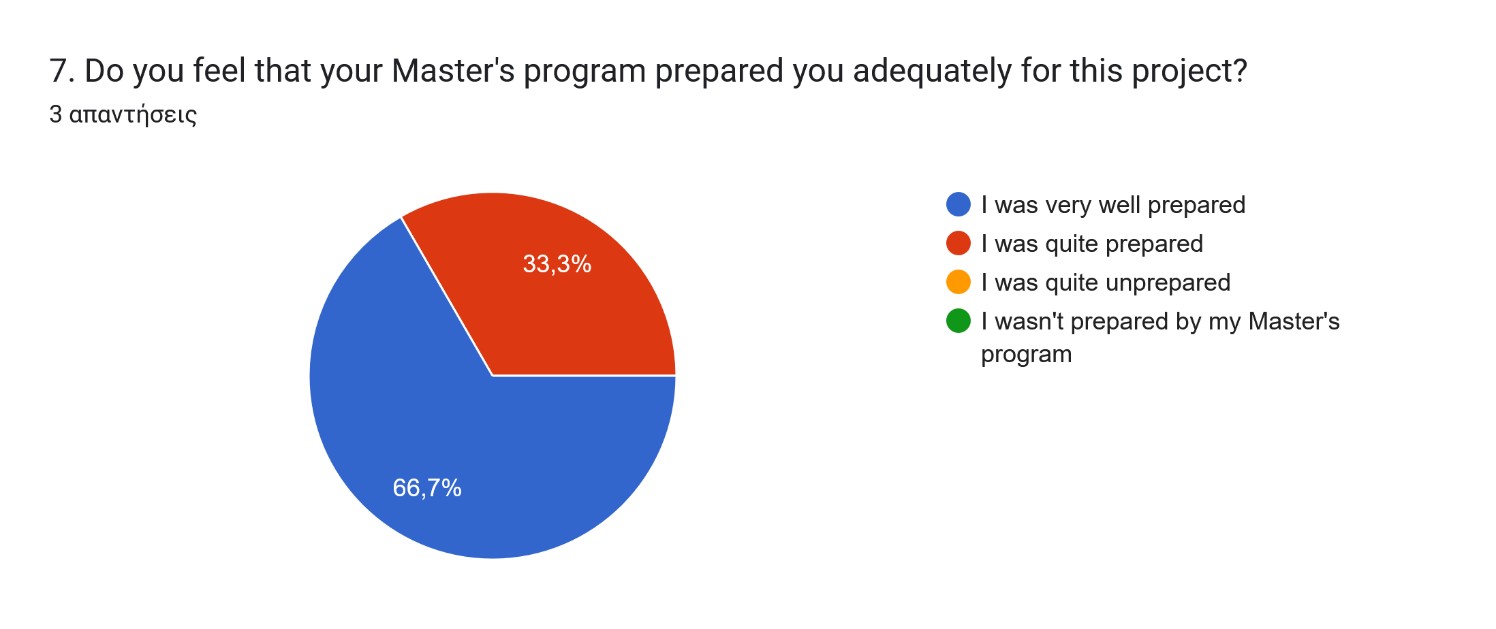
Figure 2. Graphic representation of answers in Q7
Finally, in response to the question regarding the appropriateness of the collaborative tool for its intended use, the feedback received was generally positive. Students highlighted that TPM facilitated a deeper understanding of the informational requirements involved in terminology research and documentation. TPM was consistently praised for its structured organisation and user-friendly interface, which contributed to the completion of thorough and detailed terminological work. Additionally, participants noted that the term-creation process within IATE was more straightforward than initially anticipated, and that IATE proved to be a valuable resource, particularly for translators and terminologists.
A small-scale survey was also conducted among DGT terminologists who collaborated with various universities within the framework of the “Remote cooperation between DGT and universities”. The responses obtained are indicative and do not represent all the terminologists involved.
Language combinations that have participated in this survey were the following: EN-EL, EN-ES, EN-PL, EN-FR.
In response to the question regarding whether the project required more effort than usual, the majority of participants acknowledged an increased workload. While the time investment was generally anticipated and considered manageable, several contributors noted that the collaborative nature of the project—particularly involving students—necessitated additional preparation and oversight. This included introducing participants to the tasks, revising their contributions, and providing detailed feedback, which proved to be more time-consuming than standard professional terminology work.
The feedback process was emphasised as particularly demanding due to the limited prior experience of students with terminology management and the IATE database. Moreover, some respondents expressed concern that students did not fully grasp the institutional context and practical requirements of producing entries for IATE, occasionally resulting in submissions influenced by national legislative frameworks rather than the conventions expected by EU institutions.
On the other hand, all terminologists underlined as positive aspects of the collaborative projects the following:
- Fresh perspective from students.
- Opportunity to share experiences.
- Bring EU closer to students.
- Work on non-urgent entries and enrich IATE.
- Contact with academia.
- Insights into current training in translation.
As noted above, the survey was limited to Greek students participating in the collaborative terminology project, along with a small number of terminologists from the DGT. The limited sample size constitutes a significant constraint on the study. Moreover, given the time constraints faced by the DGT, the questionnaire was restricted to eight items. The results should therefore be interpreted as indicative rather than conclusive, and they would benefit from confirmation through future research.
Evaluation of different collaborative tools and methodologies
In this section, we propose to compare the described collaborative experience with previous terminology projects in which our university was involved, using as evaluative criteria the collaborative tools and the methodologies used.
A key methodological distinction between the present project and previous initiatives lies in the implementation of a one-to-one guidance model between terminologists and students. As outlined in the preceding section, this individualised interaction has demonstrated significant pedagogical value, providing students with direct exposure to professional expertise, real-world practices, and specialised methodological approaches.
However, this structure does not inherently foster peer collaboration among students, nor does it facilitate inter-institutional cooperation to the extent observed in earlier terminology projects. Consequently, this model appears more appropriate for individual research endeavours, such as Master's theses, rather than short-term, semester-based projects that benefit from team dynamics.
It is also important to note that the success of this approach based on one-to-one relationships is highly contingent upon the availability and engagement of participating partners. While the current project benefited from exemplary collaboration and consistent feedback, findings from the accompanying small-scale survey suggest that such favourable conditions are not universally guaranteed across similar initiatives.
With reference to the tool, TPM demonstrates high usability and convenience, yielding favourable outcomes for student engagement and productivity. A notable advantage is its direct integration with the IATE database, which eliminates the need for data extraction or transfer to external tools. In contrast, the collaborative edition of FAIRterm requires terminology entries to be exported via Excel files, while commercial platforms such as MultiTerm, used in other projects, necessitate that students manually create a term base and configure the data categories to be included in. In this sense, although TPM facilitates efficient terminology management and supports pedagogical objectives, it offers limited opportunities for developing advanced technical competence, particularly in the areas of data structuring and/or data extraction.
Conclusions
Besides the different challenges mentioned, the collaborative terminology project with DGT offers many advantages for students, such as:
- Execution of real client-assigned tasks: Gaining a deeper understanding of advanced practices in terminology management within a professional context.
- Acquisition of collaborative work skills: Enhancing students’ familiarity with collaborative tools.
- Development of personal skills, such as adhering to institutional guidelines, managing time effectively.
- Enhancement of thematic expertise: Gaining in-depth knowledge in specialised areas through terminology research.
- Acquisition of domain-specific knowledge: Understanding strategies for term identification and management.
- Increased student motivation: Participating in real-life projects with clients who may become future employers.
- Improved student visibility as future professionals: Receiving certificates recognising their first professional experience; sharing experiences on various platforms.
As a final point, in an era marked by generative AI and the increasing automation of language services, the demand for high-quality terminological resources across all languages has become more critical than ever. This urgency is particularly pronounced for languages with limited digital infrastructure and a smaller language industry, such as Greek. We argue that contributing to the enrichment and expansion of terminological resources is not only necessary but also strategic. Collaborative terminology management—such as the partnership presented here between academia and the Directorate-General for Translation of the European Commission—offers a promising model for sustainable and inclusive resource development. Importantly, such initiatives also serve as valuable educational tools, enhancing students’ understanding of terminology work and preparing them for real-world professional environments.